
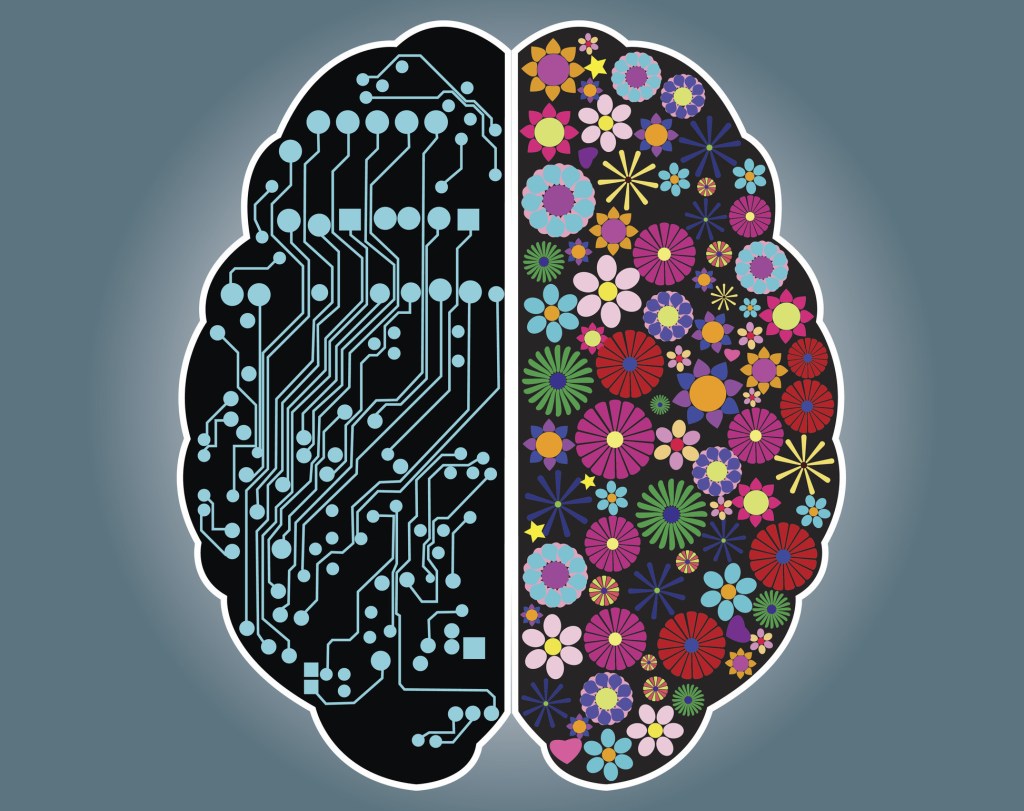
When making a fact-based appeal, many leaders pursue data and evidence as the foundation of their argument: in support of a new innovation, a change in clinical approach, or a policy position. These are essential, but usually not enough to be persuasive.
What gets neglected is that the people receiving those arguments are also human beings. Not just decision-makers or doctors or future partners. They are people. People who carry professional and personal context into every room, who have feelings about the problem before any data arrives. They are moved not only by the evidence, but are also deeply impacted by all of us the personal and the real world implications.
Bruce Japsen, a seasoned healthcare reporter and Forbes Senior Healthcare Contributor, was recently interviewed on NPR about the impact of cuts to Affordable Care Act subsidies. His expert perspective is anchored in decades of reporting. The data was clear: rising consumer costs, millions dropping off insurance rolls, businesses exiting care markets. All clear and relevant to those focused on the business of healthcare.
Bruce then brought the whole topic to life–moving from evidence to emotion. Japsen described a recent conversation with a man in his forties. He had lost his job. He had been purchasing health insurance through the ACA marketplace. With the loss of subsidies, and still unemployed, he faced a cataclysmic premium increase.
One person and his specific situation. That detail did not add information the audience did not already have. It did, however, activate the evidence in a way that the data cannot achieve on its own.
The evidence establishes the argument. The person makes it matter.
Why Data Is Not the Panacea You Think It Is
The assumption embedded in most health and science communications is that sophisticated audiences are primarily moved by evidence. This is not wrong. The absence of it is disqualifying. There can be nothing like a powerful P value.
But evidence is not the engine of behavior change. It is the threshold. It establishes credibility and earns the right to be heard. And it has to be done well. (Watch for a future post from me on this front.) Once it has done that work, something else has to do the rest.
The leaders, clinicians, investors, and policymakers you most need to reach are not, in most cases, data-resistant. They are data-saturated, with each new data point diluting in its impact. They are time stressed like many of us—so much so that few move beyond an abstract with reviewing the latest publications. The executive who has reviewed three hundred market analyses does not feel urgency from the three hundred and first. The clinician who has read fifty trial reports is not moved by the fifty-first in a way that changes what they do on Monday morning.
In an environment of saturation, additional data does not close the gap between understanding and action. A different kind of input does.
What the Human Story Actually Does
A patient story, or any story anchored in a specific person’s experience, is not decoration. Human story does something evidence cannot: it makes the abstract specific.
The audience that hears a statistic is processing a probability. The audience that meets the person behind the statistic is doing something different. They are encountering a human situation. Behavioral science research consistently shows that people respond to identified individuals at rates that bear no relationship to the statistical significance of the group those individuals represent. We act on behalf of the person in front of us in ways we simply do not act on behalf of populations, regardless of how large or how well-documented those populations are. It becomes personal.
This is how human attention and motivation function. And it applies with equal force to physicians, investors, regulators, and policymakers as it does to any other audience. The sophistication of the role does not override the humanity of the person in it.
Emotional Resonance as a Design Requirement
Engagement by Design does not treat emotional connection as a complement to evidence-based communication. It treats it as a design requirement.
This is not a case for sentiment over science. The evidence is the foundation. The human story is the architecture that makes the foundation matter to someone. The patient story is not a nice to have. It is ever-more important to breakthrough the swirl of daily lives. Data without story leaves the audience knowing and not acting. Story without data leaves the audience moved but not convinced. The discipline is in the integration: knowing when to lead with which, and how to build the argument so that each element reinforces the other rather than competing with it.
I am working on a project exploring how to change clinical practice to align with evidence-based guidelines in cancer care. One expert on the project made a recommendation: include a patient story. Specifically, the experience of a person whose one-in-ten condition made her eligible for a new medicine. Ten percent may not sound like much. The patient’s voice brings a level of reality that changes the impact of the statistics. A person living a fulfilling life makes a one hundred percent impact on the dedicated physicians involved in her care.
That is the shift. Not from ten percent to one hundred percent in any statistical sense. From a probability to a person. And that shift changes what a clinician does next.
The Question to Ask Before the Next Communication
The Impact Imperative returns to the same standard across every episode: does your engagement strategy produce evidence of impact, or only evidence of effort?
For emotional resonance, the questions are direct. Are you asking your audience to understand a probability, or to meet a person? Is the human dimension of your science, your innovation, or your program visible in your communication, or is it implied somewhere in the data? When someone finishes reading what you have sent them, do they understand what it means for a specific person, or only what it means in aggregate? If the honest answer leans toward aggregate, the right brain has been left out of the room.
That is where our work together begins.
 engagerco.com